

Table of Contents
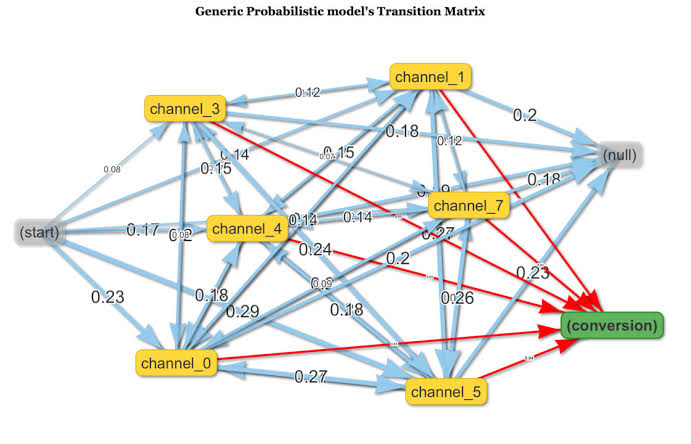
A player sees a display advertisement, reads an affiliate review two weeks later, searches for the brand directly, and registers. Three touchpoints, one conversion, and a budget meeting on Monday that needs to decide where next quarter’s spend goes.
Attribution is how that credit gets divided. It is worth being clear from the outset that every method for doing it is an assumption rather than a measurement.
The rule-based models and what each assumes
Last click gives everything to the final touchpoint. It assumes the last interaction did the persuading, which systematically over-credits channels that appear late — brand search most of all, since a player searching your name has already been convinced by something else.
First click assumes discovery is what matters and ignores everything that closed the decision.
Linear divides credit equally, assuming every touchpoint contributed identically, which is almost never true.
Time decay weights recent interactions more heavily. A defensible assumption, and still an assumption.
Position-based splits credit between first and last with the middle sharing the remainder, encoding a specific belief about how decisions form.
None of these is measuring anything. Each is a rule for dividing credit according to a theory about influence, and the theory is not tested by the model that applies it.
Why last click survives
It is the default nearly everywhere despite being the most obviously flawed option, for reasons that are practical rather than analytical.
It is unambiguous, cheap to implement, consistent across reporting tools, and defensible in a meeting because everyone understands it. Alternative models produce different numbers that channel owners immediately dispute, and the argument consumes more time than the improved accuracy is worth.
There is a reasonable position here: last click is fine as a consistent yardstick for tracking direction over time, provided nobody mistakes it for a measure of influence.
Data-driven attribution and its ceiling
Algorithmic approaches compare converting and non-converting paths to estimate each touchpoint’s contribution, which is a genuine improvement over fixed rules.
They need substantial volume to be stable, and they remain fundamentally correlational. A channel that appears in successful paths may be causing conversions or may simply be where already-interested people happen to go.
They also inherit every gap in the underlying tracking, and those gaps have widened.
The tracking is degrading
Worth stating plainly because it changes what is achievable.
Cross-device journeys break attribution chains routinely — discovery on mobile, registration on desktop. Privacy protections and cookie restrictions have reduced the visibility that these models were built on. Large advertising platforms report their own contribution using their own methodology, and their numbers reliably exceed what independent analysis finds.
Summed across channels, self-reported conversions frequently exceed total actual conversions, which is a useful reminder of what those figures represent.
The question attribution cannot answer
Attribution divides credit for conversions that occurred. The budget decision requires knowing what would have happened without the spend.
These are different questions, and the second is the one that matters. A channel credited with a large share of conversions may be reaching people who would have registered anyway — brand search being the clearest case, and paid social frequently another.
The answer is incrementality testing rather than better attribution modelling. Withhold spend in matched regions and compare. Vary budget deliberately and observe the response. Run a genuine holdout where the channel supports it.
These tests are inconvenient, require accepting some lost volume, and produce the only numbers in marketing measurement that describe causation rather than correlation.
Cohort value beats conversion count
Whatever model is used, credit should be assigned to long-term value rather than to registrations.
Channels differ enormously in the quality of players they deliver. A source producing many registrations that deposit once and disappear is not comparable to one producing fewer players who persist, and attribution measured on conversions treats them as equivalent.
This requires joining acquisition source to player activity over months, which depends on the source being recorded at registration and retained on the player record permanently. Where acquisition data, activity and payments sit in one system — PWP.BET iGaming solutions and comparable integrated platforms — that join is a query. Where they are split across a platform, an ad tool and a separate warehouse, the analysis usually gets done once and never repeated.
A workable position
Use a consistent attribution model for directional tracking and internal reporting. Do not switch models to win arguments.
Assign credit against cohort value, not registration counts.
Make actual budget decisions on incrementality tests, run on the channels where the spend is large enough to justify the effort.
And treat every platform’s self-reported figures as marketing material rather than measurement, because that is what they are.
