

Table of Contents
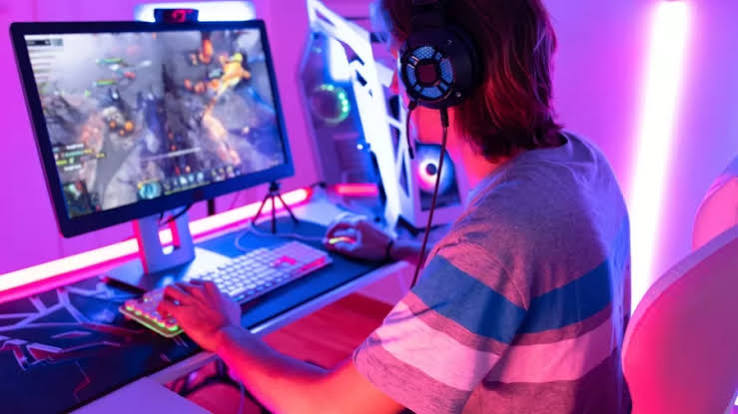
Twenty years ago, the idea that thousands of people would fill an arena to watch other people play a computer game would have sounded absurd. Today it is a scheduling problem. Venues book out. Broadcasts run in a dozen languages. Players sign contracts with terms that would look familiar to any football agent.
Competitive gaming did not arrive suddenly. It grew steadily for two decades and then crossed a threshold where the mainstream noticed. What is more interesting than the growth itself is why it has not stopped.
The infrastructure caught up
The single largest factor is unglamorous: internet connections improved.
Competitive gaming is unusually sensitive to connection quality. A delay of a fraction of a second changes the outcome of an exchange. For years, that meant serious competition was concentrated in a handful of countries with the best networks, while enormous populations of enthusiastic players were effectively locked out of the top level.
As connectivity has spread, that has changed. Regions once treated as peripheral to competitive gaming now produce professional teams, run their own leagues, and export talent. The map of who competes seriously has widened considerably, and the growth in participation has followed the growth in bandwidth almost exactly.
A generation that grew up with it
The audience is also simply older than it used to be.
People who started playing competitively as teenagers are now in their thirties and forties, with disposable income and no sense that watching a match is unusual. They did not have to be convinced that gaming is a legitimate spectator activity, because it was normal to them before it was normal to anyone else.
That has knock-on effects. Parents who game themselves are less resistant when a child wants to take it seriously. Schools and universities have introduced competitive gaming programmes with far less friction than they would have faced a decade ago. Sponsors no longer have to explain the audience to their boards.
The economics are unusual, and that helps
Traditional sport requires facilities. Football needs pitches. Basketball needs courts. Competitive gaming needs a computer and a connection, both of which many households already have for other reasons.
That low barrier is why talent emerges from places with no formal sporting infrastructure. A player in a small town with a modest setup can practise against the best in their region every evening, and their progress depends on ability and effort rather than proximity to a training facility.
It also means the skill ceiling is genuinely open. Nothing prevents a self-taught player from reaching the top tier except the difficulty of the game itself, and gaming communities are unusually generous with knowledge. Detailed strategy breakdowns, technique tutorials and setup guides circulate freely — a player wanting to squeeze more performance out of an older machine can find a CS2 launch options guide and close a meaningful part of the hardware gap without spending anything.
The titles that endure
Not every competitive game lasts. Most do not. Publishers launch titles with tournament ambitions every year, and the majority fade within two or three seasons.
The ones that survive share a pattern. They are simple to understand as a spectator, extremely difficult to master as a player, and stable enough that skill accumulated over years remains relevant. Counter-Strike is the clearest example — a game whose core has barely changed in twenty-five years and whose competitive scene has outlasted almost every rival launched to replace it.
That stability matters commercially. Sponsors and broadcasters are far more willing to commit to a title with a decade of history than one in its first season.
What comes next
The likeliest direction is regional rather than global. Rather than one worldwide circuit, competitive gaming is developing dense local scenes — national leagues, regional tournaments, community events — that feed into international competition.
That structure resembles traditional sport more than the industry’s early years did, and it is probably healthier. It creates paths for players who will never turn professional but want to compete seriously, and it builds audiences with a local reason to care.
For a form of entertainment that was dismissed as a passing fad for most of its existence, that is a fairly ordinary trajectory. Which is, in its own way, the strongest evidence that it is here to stay.
